Gopal Narayan Singh University, established in 2018 in Rohtas, Bihar, is a prominent private university. It offers a diverse array of UG, PG, and doctoral programs across 15 faculties, including Medical, Engineering, and Management, fostering a vibrant academic environment on its 50-acre campus.
About Gopal Narayan Singh University - [GNSU] Sasaram
Gopal Narayan Singh University (GNSU) is a private university established in 2018 at Jamuhar, near Sasaram in Rohtas district, Bihar. Recognized by the University Grants Commission, it is one of the prominent private universities in the state and functions under the Deo Mangal Memorial Trust founded by Sri Gopal Narayan Singh. The campus spans over 70+ acres on the old GT Road between Sasaram and Dehri-on-Sone, offering a residential, multidisciplinary environment.
GNSU is approved by UGC and runs a wide spectrum of programmes through faculties of Medical Sciences, Management, Commerce, Nursing, Information Technology, Law, Pharmacy, Paramedical Sciences, Agriculture, Mass Communication & Journalism, Library & Information Sciences and Engineering. The university offers more than 72 UG, PG and PhD programmes and includes a full-fledged medical college and hospital on campus. GNSU has participated in NIRF 2025 (Overall, Medical, Pharmacy, Agriculture, Management and Law categories), reflecting its growing focus on structured quality benchmarks and national visibility.
Key Highlights
Admission Dates 2026
Gopal Narayan Singh University runs a centralised admission cycle for all UG and PG programmes, with the commencement of admission process for the 2025-26 academic session on 01 July 2025 for Undergraduate (UG) courses as notified in the official academic calendar. Admissions use national tests such as NEET, CUET-UG, CUET-PG, CAT, MAT along with GNSU’s own process, and applications are submitted through the university admission portal.
Admission Process
Gopal Narayan Singh University offers admission through multiple routes: national-level entrance exams (CUET, NEET, CAT, GATE), state-level exams, and merit-based selection. Undergraduate programmes require 10+2 qualification with minimum 45-50% marks, while postgraduate programmes require a bachelor's degree with 50% aggregate. The university conducts its own entrance test (University Entrance Test-2025) in Computer Based Test mode for select programmes.
Undergraduate Admission
Steps to Apply
- Visit the official website (gnsu.ac.in) and click "APPLY ONLINE" to access the application portal
- Complete the online registration form with personal and academic details
- Upload required documents (10th and 12th mark sheets, entrance exam scorecard if applicable)
- Pay the application fee online
- Appear for the relevant entrance examination (CUET, NEET, or University Entrance Test-2025)
- Check merit list/counselling schedule on the official website
- Participate in counselling and receive allotment letter
- Submit original documents for verification at the admission office
- Pay course fees to complete enrollment
Postgraduate Admission
Steps to Apply
- Visit gnsu.ac.in and access the PG admission portal
- Fill the online application form with bachelor's degree details
- Upload graduation mark sheet and degree certificate
- Pay application fee
- Appear for entrance exam (CAT/MAT for MBA, GATE for M.Tech, NEET-PG for MD/MS)
- Attend counselling based on entrance exam performance
- Submit documents for verification
- Complete fee payment for final enrollment
Eligibility Criteria & Fees
Documents Required
- 10th and 12th mark sheets
- Graduation mark sheet and degree certificate (for PG)
- Entrance exam scorecard (CAT, MAT, NEET, CUET, GATE, etc.)
- Proof of identity (Aadhar card or passport)
- Passport-size photographs (4-6 copies)
- Category certificate (if applicable for SC/ST/OBC/BC)
- Transfer certificate from last institution
- Migration certificate (for students from other universities)
- Character certificate
- Medical fitness certificate (if required)
- Allotment order from counselling
Alternative Application Methods
- At Institute Counter: Obtain prospectus and application form from the Admission Office at Jamuhar, Sasaram by paying the application fee
- By Post: Download PDF form from gnsu.ac.in, complete manually, attach passport photo, and send with demand draft to GNS University Admissions Office, Jamuhar, Sasaram, Rohtas, Bihar
Rankings & Accreditations
Gopal Narayan Singh University (GNSU), Sasaram has participated in NIRF 2025 in multiple categories (Overall, Medical, Pharmacy, Agriculture, Management and Law) as reflected on its official NIRF page, but it has not secured a published rank in the NIRF 2025 or 2024 national ranking lists. The university’s prominent published ranking is in Outlook’s 2025 list for private B.Tech institutes.
NIRF 2025
Other Rankings
Accreditations
- NAAC: Not accredited by NAAC (no listing on NAAC’s official portal and no NAAC grade on the university’s official website)
- NBA: No NBA-accredited programmes listed on the university’s official website or NBA’s official portal
Comparison
These institutions are private multidisciplinary universities in Bihar that participate in NIRF, offer popular professional programmes (engineering/management/health sciences), and are typical alternatives considered by students looking at Gopal Narayan Singh University, Sasaram.
Key Strengths
- Gopal Narayan Singh University - [GNSU] Sasaram: Emerging private university in Bihar with multidisciplinary offerings and focused attention on professional programmes like medical, pharmacy, agriculture and management, supported by steady MBA placements around ₹3.5 LPA median.
- Amity University, Patna: Benefit of Amity group brand, stronger NIRF-recognised parent university, wider corporate connect, and higher-end management and engineering placement outcomes compared with most regional private peers.
- Chandigarh University: Nationally visible private university with NIRF 2025 University top-20 rank, NAAC A+ accreditation, diversified programmes and comparatively high placement packages and average salaries across engineering and management.
Campus & Infrastructure
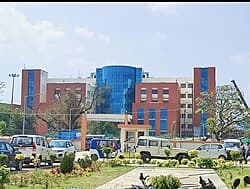
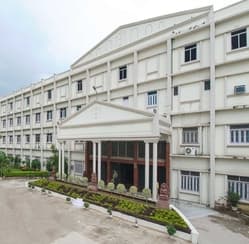
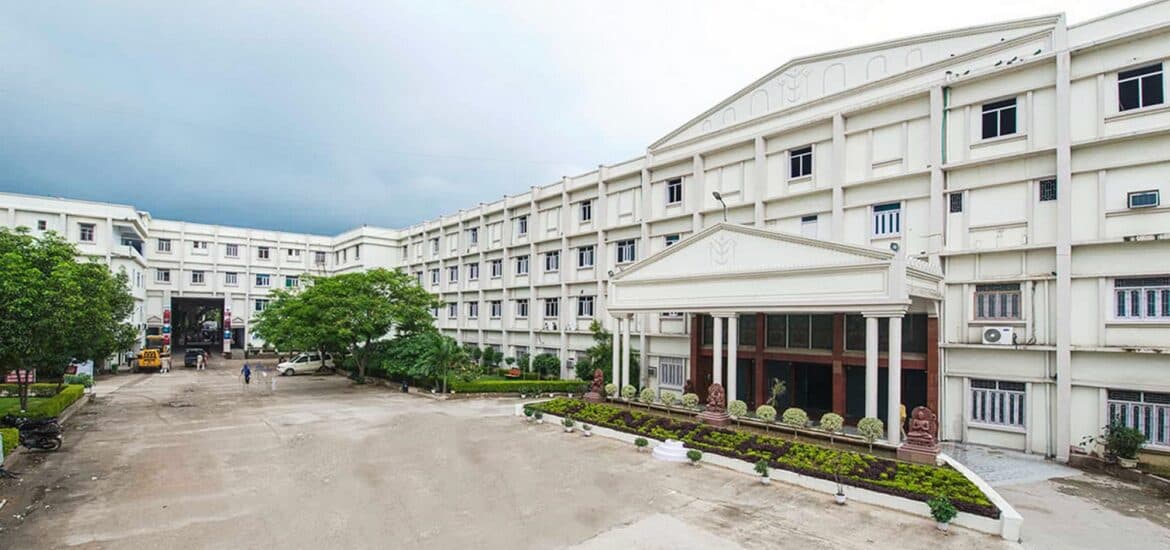
Gopal Narayan Singh University has a green, integrated campus of over 50 acres at Jamuhar village near Sasaram in Rohtas district, Bihar, combining academic blocks, hostels and Narayan Medical College & Hospital in one hub. The campus lies on the old GT Road between Sasaram and Dehri-on-Sone, giving it road connectivity to nearby towns.
Campus Details
Academic Facilities
- Library: One of the largest built-in university libraries in the region with a large collection of journals, research papers, books and periodicals
Hostel
Other Facilities
- Narayan Medical College & Hospital on campus providing medical and healthcare facilities
- Multiple food courts and cafeterias built to high hygiene standards
- Gym and fitness centre
- Multifacility halls for cultural and recreational activities
- Parks and playgrounds with indoor and outdoor sports facilities
- On-campus bus/transport facility
- Wi‑Fi-enabled campus with computer laboratories
Frequently Asked Questions
How do I apply for admission to Gopal Narayan Singh University?
You can apply online through the GNSU website by using the “Apply Online” link, registering with mobile/email, filling the form, uploading documents and paying the application fee, or apply offline by collecting and submitting the form at the institute counter with a demand draft.
Which entrance exams are required for MBBS, BTech, MBA and law at GNSU?
MBBS and MD/MS admissions use NEET-UG and NEET-PG scores. BTech and many other UG courses use CUET-UG, while MBA accepts CAT, MAT or CUET-PG scores. BALLB (Hons) uses the GNSU Common Admission Test conducted by the university.
What is the basic eligibility for BALLB (Hons) at GNSU?
For BALLB (Hons), you must have passed Class 12 with at least 45% aggregate for general category and 40% for SC/ST. You must also fill the online application on the GNSU website and appear for the GNSU Common Admission Test as the mandatory entrance exam.
What is the hostel fee structure and room sharing pattern at GNSU?
On-campus hostel charges are around ₹54,000 per year, or about ₹4,500–₹5,000 per month including food, for 2–4 sharing rooms. Hostels provide 24×7 electricity, purified water, lift, furnished rooms and in-house mess with vegetarian and non‑vegetarian meals.
How many hostels and hostel seats are available, and are there separate hostels for girls?
The university runs 9 hostels in total, with 5 for boys and 4 for girls, accommodating over 3,100 students. Separate hostels for girls have 24×7 security, Wi‑Fi, dining halls, laundry and gym access within the campus.
Does GNSU offer any scholarships or financial support to students?
GNSU offers merit-based and need-based fee concessions in selected programmes, along with government scholarships routed through the university for eligible categories. Students typically apply with academic records and category/income certificates during or after admission university notifications.
How are the placements for professional courses like engineering, pharmacy and management at GNSU?
Placement opportunities exist mainly for job-oriented programmes such as BTech, pharmacy and MBA, with campus drives by regional companies and hospitals. Students commonly use the university hospital, industry tie‑ups and internships to build profiles, while exact average package figures differ by course and year.
Does the university provide internship opportunities through its own hospital and centres?
Yes, GNSU runs its own teaching hospital on campus used for clinical postings and internships for MBBS, nursing and allied health students. Pharmacy, agriculture and other departments also use university labs, farms and tie‑ups for project work and short-term internships.
How is the academic infrastructure, labs and library facilities at GNSU?
The campus has separate, well-equipped labs for nursing, pharmacy, agriculture, engineering and law (including a moot court), along with department-wise libraries and a central library. Most classrooms are digital with projectors and Wi‑Fi, and students mention easy access to computer labs and online resources.
What sports and fitness facilities are available on the GNSU campus?
GNSU has a cricket ground with turf wickets and nets, a standard football field, 8 badminton courts, 4 volleyball courts, 2 basketball courts, two separate gyms, a yoga centre and a jogger’s park. Full‑time sports instructors and taekwondo-based self‑defence training are also provided.
How is campus life at GNSU in terms of fests, events and student activities?
Students report an active campus with events such as Metamorphosis (major fest), GNSU Rangotsav, Dandiya nights, Kisan Mela, Holi and Chhath celebrations. Regular sports days, conferences and moot‑court activities create a busy calendar, with cafés and rest areas inside the 50+ acre green campus.
What is the quality of food in the hostel mess and campus canteens?
Hostel messes serve 3–4 meals daily with both vegetarian and non‑vegetarian options. Reviews describe food as hygienic and sufficient in quantity, with taste rated from average to good. Besides hostel messes, there are multiple canteens and food courts inside the campus.
How safe is GNSU for students, especially for girls and hostellers?
The residential campus has 24×7 security, CCTV in hostels, controlled entry and an on‑campus hospital. Separate girls’ hostels, supervised hostels and regular infrastructure inspections support safety, while self‑defence sessions for female students run through the sports and wellness system.
Is there any dress code or uniform for students at GNSU?
Professional courses such as nursing, pharmacy and some health sciences use prescribed uniforms or lab coats during practicals and hospital duties. Law and management often follow formal or semi‑formal dress codes for moot courts, presentations and events, while other classes usually allow decent casuals within university guidelines.
What are the transport and connectivity options to reach the GNSU campus at Sasaram?
The campus lies near the Karwandiya area of Sasaram in Rohtas district, accessible by road from Sasaram town and nearby villages. Students typically use university buses, shared autos and local buses from Sasaram railway station and town to commute daily.
Are part-time jobs or outside room rentals possible for GNSU students?
Students mention that rooms in nearby villages cost around ₹60,000 per year if taken outside campus. Part‑time jobs around Sasaram are limited and mostly informal (tuition, local shops), so most students rely on hostels and focus on full‑time study rather than structured part‑time work.
How does GNSU compare to other private universities in Bihar for infrastructure and campus size?
Students frequently rate GNSU among the better private campuses in Bihar, highlighting its 50+ acre green campus, multiple hostels, own hospital, separate departmental libraries and extensive sports complex. Several reviews describe it as having one of the strongest overall infrastructures in the region.
Is GNSU a good choice for law (BA LLB) in terms of exposure and facilities?
The law faculty has a dedicated moot court hall, library access and regular participation in intra‑ and inter‑college moot competitions. Students also mention a law-focused portal managed by the moot‑court team and exposure through seminars, which together provide practical orientation for BALLB learners.








 Gopal Narayan Singh University, Jamuhar, Sasaram, Rohtas, Bihar, India - 821305
 Contact: +91-9262232345


.png&w=1920&q=75)