


Table of Contents
About ARIES
ARIES Courses and Fees 2026
| Degree | Duration | Annual Fee | Seats | Eligibility | Action |
|---|---|---|---|---|---|
Post Doctoral Fellowship Programme1 Specialization | 2 Years | NA | NA | NA | Apply Now |
Ph.D2 Specializations | 3 Years | NA | NA | Post Graduation with 55% | Apply Now |
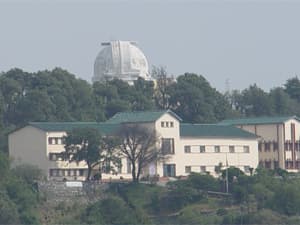
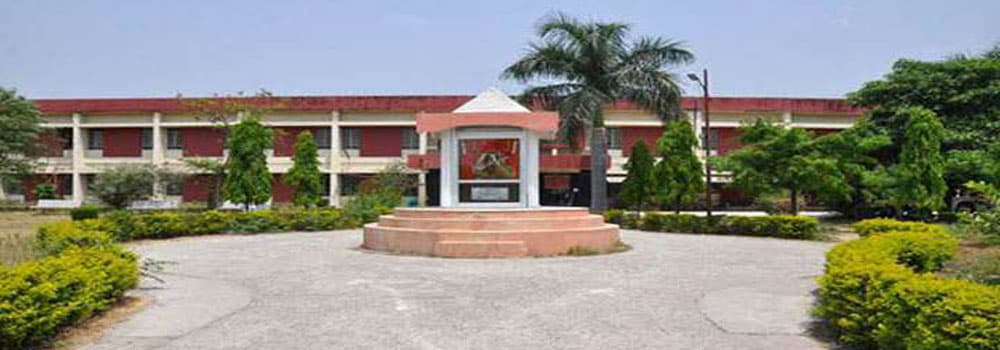
ARIES Campus Gallery
Nearest Attractions at ARIES
 Manora Peak, Nainital - 263001, Uttarakhand, India
 Contact: +91-5942-270700, +91-5942-233734
Nearby Locations

Pantnagar Airport (PGH)
70 km

Tallital Bus Stand, Nainital
6 km

B. D. Pande Hospital, Nainital
6 km

Kathgodam Railway Station
35 km
Facilities Provided by ARIES
- Auditorium
- Seminar Halls
- Guest House Facilities
- Campus-wide Wi-Fi Connectivity
- High-Speed LAN
- Access Control System
- Cafeteria
- Mess Facility
- Guest House (Devasthal Campus)
- Guest House (Manora Peak Campus)
- Hostel Accommodation (Boys)
- Hostel Accommodation (Girls)
- Staff Quarters
- ARIES HPC Cluster
- ARIES Supercomputer (ARIES_GPU_Cluster)
- Dedicated Servers
- High-End Workstations
- 1.04m Optical Telescope
- 1.3m Devasthal Fast Optical Telescope (DFOT)
- 15cm Solar Telescope
- 3.6m Devasthal Optical Telescope (DOT)
- ADFOSC (Aries Devasthal Faint Object Spectrograph & Camera)
- ARIES-TIFR Near Infrared Spectrometer (AT-NIRSPEC)
- Broadband Imager (CCD Imager)
- Computational Research Labs
- Observational Research Labs
- Central Library
- Digital Library & E-Resources
- Emergency Ambulance Service
- Health Center / OPD Facility
- Tie-up with Private Hospitals
- CCTV Surveillance System
- Security Guards
- Gymnasium
- Sports Complex (Indoor & Outdoor)
- Inter-Campus Shuttle Service
- Official Vehicles Fleet
- Parking Facilities
Student Reviews & Testimonials
Yesterday afternoon 14 June 2024, I had the opportunity to visit the Aryabhatta Institute of Astrophysics and Observatory near Nainital. To gain access, visitors must fill out a form and register. Visits to their science lab typically begin at 4:30 pm and are available to the public three days a week. The institute is located 10 kilometers from Nainital, and since there is no public transportation, visitors need to arrange their own vehicle or hire a taxi, I paid 2500/-. The drive through the hilly region takes approximately 30 minutes each way. Despite several attempts to contact the scientists beforehand, my calls went unanswered. The visitor activities are managed by postgraduate and PhD students on a rotational basis. The visit commenced with a 10-minute film about the institute and its scientists, followed by the observation of sunspots through a 50 mm telescope, concluding by 5 pm. The next scheduled activity, stargazing, begins at 7:30 pm, leaving visitors with 2.5 hours of free time. The campus has a small canteen offering tea and coffee but no snacks, which felt insufficient. The stargazing session, starting at 7:30 pm, involved adjusting their 200 mm telescope for about 30 minutes. I was the first to observe the moon and its craters, but the session ended quickly with around 30 visitors. The entire activity, lasting about 30 minutes, seemed disproportionate to the 5-6 hours invested in the visit. Additionally, the security gate is located 2 kilometers downhill, with no early departure allowed. The lack of reception, lounge, or canteen facilities at the gate was inconvenient. For example, when a lady requested drinking water for her child, she was directed to a nearby public handpump. During the sunspot observation, I inquired about the recent low-latitude sightings of the aurora borealis, but the students couldn't provide an answer. They also mentioned that stargazing sessions are canceled if the weather is cloudy. I requested to speak with a senior scientist, which was arranged. During our discussion, I asked various questions about the Starship 4 launch, neutron stars, and other astronomy-related simple topics. The senior scientist, however, indicated that their focus was on their own research and collaborations, and they were unable to address my queries. When I suggested improving the infrastructure for visitors, he mentioned that it was the government's responsibility and emphasized their heavy workload. Suggestions for Improvement: 1. Visitor Engagement: - Revise the registration form with consideration for visitors from diverse backgrounds, especially children, to address their curiosity. - Implement regular Q&A sessions led by senior scientists to answer common astronomy questions. Monthly sessions with the institute's director could help keep all scientists updated with current knowledge in astrophysics. 2. Educational Activities: - Show educational films about the institute's work that are understandable to the general public to spark interest in astronomy among younger generations. - Utilize all available telescopes on campus, including the 40-inch telescope, to provide a comprehensive experience for knowledgeable visitors. 3. Infrastructure Enhancements: - Improve facilities at the security gate, such as adding a reception area, lounge, and adequate canteen services. - Ensure drinking water and basic amenities are readily available for all visitors. 4. Professional Development: - Require annual examinations for scientists to stay updated on global advancements in their field. - Foster a culture of curiosity and public interaction, similar to the approach of Dr. Abdul Kalam Azad sir, to better educate and engage with visitors. Overall, there is a need for a more visitor-friendly approach, enhanced educational activities, and better infrastructure to make the experience at the Aryabhatta Institute of Astrophysics and Observatory more enriching and enjoyable for the public.
Visited in its initial days 2016
Really great experience, first time ever i have seen stars by naked eyes.
Watched real time eclipse today @aria.. Wonderful experience...
Get personalized guidance from our admission counselors
Discover more Colleges

.png&w=1920&q=75)



NIRF #4 India
NIRF #4 India


NIRF #4 India

fits you best?
Get personalized guidance from our admission counselors