

.png&w=1920&q=75)
.png&w=1920&q=75)


Guru Gobind Singh Indraprastha University Courses 2026: Admission, Fees, Programs & Overview


Table of Contents
Guru Gobind Singh Indraprastha University Courses: an Overview 2026
Guru Gobind Singh Indraprastha University (GGSIPU) is one of Delhi's premier state universities. The Government of NCT of Delhi established it in 1998 to foster professional education and research excellence in the National Capital Region.
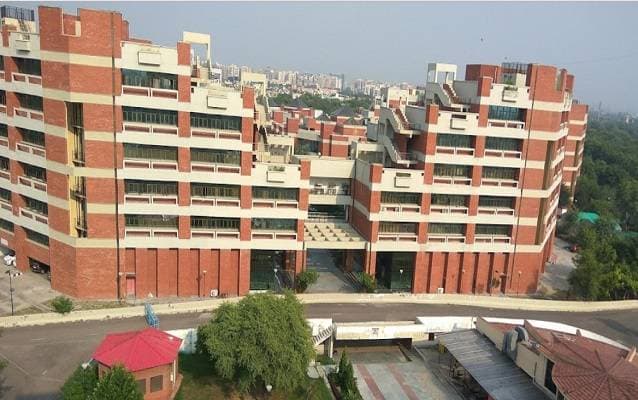
The university has earned notable distinction through its NAAC 'A+' accreditation and consistent presence in the NIRF rankings. This reflects its unwavering commitment to quality higher education and institutional development. With a sprawling 60-acre campus in Dwarka Sector 16 and academic oversight of more than 120 affiliated colleges across Delhi-NCR, GGSIPU serves as a vital educational hub for pursuing diverse academic disciplines from engineering to medicine. The institution emphasizes a pedagogical approach that blends theoretical knowledge with practical industry skills, supported by advanced infrastructure and contemporary research facilities. Its foundational mission centers on creating competent professionals who contribute meaningfully to India's economic growth and social development through innovation, ethical leadership, and technical expertise.
The table below summarizes the essential institutional highlights and credentials of Guru Gobind Singh Indraprastha University for the 2026 academic session.
| Name | Description | Key Details | Additional Info |
|---|---|---|---|
| Establishment & Governance | Founded under the Government of NCT of Delhi Act to provide professional education | 1998 establishment year under State Legislature | State University status with UGC recognition and approval |
| NAAC Accreditation | Quality assessment by National Assessment and Accreditation Council for higher education standards | 'A+' grade with 3.58 CGPA score | Valid accreditation cycle ensuring continuous quality maintenance |
| NIRF Ranking 2025 | National Institutional Ranking Framework performance among Indian universities | 76th rank in University category | Consistent improvement in teaching, research, and graduation outcome metrics |
| Campus Location | Main campus situated in Southwest Delhi with modern amenities | Dwarka Sector 16, spread across 60+ acres | Direct metro connectivity and residential facilities for students |
| Affiliated Institutions | Network of colleges operating under university affiliation across Delhi-NCR | 120+ affiliated colleges and institutes | Located across Delhi, Noida, Greater Noida, and Gurgaon regions |
| Academic Departments | University schools offering specialized education in professional disciplines | 15+ dedicated university schools and centers | Engineering, Medicine, Law, Management, and Humanities streams |
| Program Portfolio | Comprehensive range of academic offerings across undergraduate and postgraduate levels | 150+ UG, PG, diploma, and doctoral programs | Professional, technical, and traditional courses with industry relevance |
| Student Community | Total enrollment figures representing diverse demographic representation | 50,000+ enrolled students across all programs | Pan-India representation with international students in select programs |
| Faculty Excellence | Teaching and research staff strength with academic qualifications | 800+ regular faculty members | PhD holders with extensive industry and research experience |
| Infrastructure Facilities | Physical and digital learning resources supporting academic activities | Smart classrooms, 500+ computers, central library | WiFi-enabled campus, research laboratories, and sports complexes |
| Notable Alumni Network | Distinguished graduates holding leadership positions in various sectors | Kiren Rijiju (Union Minister), IAS officers, High Court judges | Leaders in judiciary, medicine, engineering, corporate sectors, and public service |
| Research Ecosystem | Innovation centers and development facilities promoting advanced studies | 50+ specialized research centers and labs | Patent support, funded projects, and industry collaboration initiatives |
| Placement Statistics | Career outcomes and recruitment success for graduating students | 85%+ annual placement rate across programs | Average package ₹6-8 LPA with top recruiters visiting campus |
| Fee Structure | Annual tuition and program costs varying by course type | ₹40,000 to ₹2,50,000 per year | Program-dependent fees, subsidized rates for government college students |
| Admission Mechanism | Entrance examination system for merit-based seat allocation | IPU CET, CAT, MAT, NATA accepted for | Centralized counseling process through university portal |
GGSIPU represents a complete educational ecosystem that bridges academic rigor with professional readiness, making it a preferred destination for aspirants across India seeking quality higher education in the National Capital Region. The university's strong infrastructure, coupled with its extensive network of affiliated colleges, ensures accessible professional education supported by contemporary research facilities and industry partnerships. Prospective students should carefully review program-specific eligibility criteria, entrance examination schedules, and counseling procedures to secure admission into this esteemed institution for the 2026 academic year.
Guru Gobind Singh Indraprastha University Courses: Undergraduate Programs 2026
Guru Gobind Singh Indraprastha University has over 120 affiliated institutions spread across Delhi NCR, making it a sought-after destination for undergraduate education in North India. The university's industry-oriented curriculum spans engineering, law, medicine, management, and humanities. Nearly 50,000 aspirants compete through rigorous entrance examinations annually to secure seats in premier colleges.
These colleges include the University School of Information and Communication Technology, Vivekananda Institute of Professional Studies, and Maharaja Agrasen Institute of Technology. For the 2026 academic session, GGSIPU has refined its program structures to align with emerging sector demands. They are introducing specialized tracks in artificial intelligence, data science, and cybersecurity while maintaining its traditional strengths in legal and medical education. Students must navigate a complex admission landscape where each program demands specific subject combinations in 10+2 and distinct entrance testrequirements. Early preparation is essential for the January to March application window.
The Bachelor of Technology programs remain the university's flagship offerings. Computer Science and Engineering command the highest cutoffs through the IPU CET scheduled between May 25 and June 5, 2026.
This four-year degree requires candidates to secure a minimum 55% aggregate in Physics, Chemistry, and Mathematics in their 10+2 examinations. Relaxations are available for reserved category candidates as per Delhi government norms. Beyond the core curriculum of 120 credits, students can pursue specializations in AI, Data Science, and Cybersecurity. These specializations are developed in collaboration with industry partners like IBM and Cisco. The program emphasizes hands-on learning through six-month industrial training and capstone projects. Top affiliated colleges report average placement packages of ₹6.5 lakh per annum and peak offers exceeding ₹18 lakh from recruiters like TCS, Infosys, and Wipro.
For students inclined toward legal professions, the five-year integrated B.A. LL.B. (Hons.) program combines rigorous humanities education with 150 credits of legal training. This includes mandatory moot court competitions and internships with the Delhi High Court and Supreme Court, given the university's strategic location in the capital.
Admission requires clearing the IPU CET law entrance. Candidates need 50% aggregate in 10+2 from any recognized board. Aspiring architects must qualify through NATA scores rather than IPU CET for the five-year B.Arch program comprising 175 credits of studio-based learning. This program maintains limited seat availability across select affiliated colleges. The curriculum is designed in consultation with the Council of Architecture, ensuring graduates meet professional licensing requirements while developing portfolios through live projects with Delhi-based architectural firms.
The three-year BBA and B.Com (Hons.) programs cater to commerce stream students seeking careers in finance and corporate management. Both require IPU CET clearance and 50% minimum marks in 10+2 with Mathematics for B.Com aspirants.
These 120-credit programs incorporate summer internships with Delhi-based financial institutions. Coursework emphasizes GST compliance, financial modeling, and business analytics, leading to average placement packages of ₹4.5 to ₹6 lakh per annum. The Bachelor of Journalism and Mass Communication offers 108 credits of practical training across three years. Students gain field experience at NDTV, India Today, and other media houses in the NCR region. The BJMC program specifically emphasizes ethical journalism standards and digital media production, preparing graduates for roles in broadcasting and digital content creation with entry-level salaries ranging from ₹3.5 to ₹4.5 lakh per annum.
Medical aspirants must navigate a separate admission track entirely. The MBBS program accepts only NEET scores for the 5.5-year duration including compulsory internship. Seats are limited to the university's medical college and associated hospitals.
The four-year B.Sc. Nursing program with 140 credits offers clinical training at premier Delhi hospitals like Safdarjung Hospital and Lok Nayak Jayaprakash Narayan Hospital. It requires IPU CET qualification plus 50% marks in 10+2 with Physics, Chemistry, and Biology. The nursing curriculum integrates 1800 hours of supervised practice, preparing students for registration with the Indian Nursing Council and immediate employment in healthcare facilities across the National Capital Region.
The 2026 admission cycle commences with online applications opening January 15. Prospective students must carefully align their entrance exampreparation with their chosen discipline—whether IPU CET for engineering and management, NEET for medicine, or NATA for architecture.
Document verification is scheduled for July 25-30 and classes begin August 1, 2026. Candidates should monitor the official university portal for seat matrices across the 120+ affiliated colleges, ensuring they meet specific eligibility thresholds for their desired specialization. Early registration and strategic college preference selection during the July counseling rounds remain critical for securing seats in high-demand programs where competition ratios often exceed 50:1 for top-tier institutions.
Guru Gobind Singh Indraprastha University Courses: Postgraduate Programs 2026
Guru Gobind Singh Indraprastha University is Delhi NCR's premier state university. It continues to expand its intellectual footprint through a strong selection of master's programs for the 2026 academic session.
The university's postgraduate portfolio has been meticulously designed to bridge the gap between academic theory and industry practice. It responds to evolving market demands across technology, management, and humanities sectors. With IPU CET 2026 scheduled between May 25 and June 5, prospective students must navigate a competitive admissions landscape that emphasizes both entrance examination performance and prior academic excellence. These programs distinguish themselves through research-oriented curricula, credit-based progressive learning systems, and strong integration with professional domains. They position graduates for advanced career trajectories in India's competitive job market.
The Master of Business Administration program is the flagship offering within GGSIPU's graduate school. It is structured as a rigorous 2-year program comprising 72 credits of intensive coursework.
Admission to this sought-after degree requires valid scores in CAT, CMAT, or GMAT, followed by university-level counseling procedures commencing July 1, 2026. Counseling continues through subsequent rounds until July 20 for spot admissions. Students can specialize in high-demand domains including Marketing, Finance, and Human Resources. The curriculum emphasizes leadership development, strategic decision-making, and organizational behavior. The program's industry-focused architecture ensures that graduates possess practical management competencies aligned with corporate requirements in Delhi's competitive business environment. Candidates must complete document verification by July 30, 2026, securing their seats before the August 1 sessioncommencement.
For engineering graduates seeking advanced technical specialization, the M.Tech in Information Technology presents a research-intensive pathway spanning two years and 64 credits of advanced study.
This program concentrates on emerging technologies, sophisticated networking systems, and database security protocols. Candidates must qualify through IPU CET 2026 examinations scheduled during the May 25-June 5 window. The curriculum emphasizes laboratory research, technological innovation, and thesis preparation, positioning students for specialized roles in software architecture and enterprise systems. Unlike the MBA's national entrance examrequirement, M.Tech admissions rely primarily on the university's common entrance test. Counseling rounds are scheduled for July 10-14, 2026, and potential spot rounds on July 20. This offers technical professionals an opportunity to deepen their expertise within Delhi's thriving technology ecosystem before classes begin August 1.
The university balances technical and liberal arts education through its MCA and M.A. English programs. Both are structured as complete two-year postgraduate degrees with distinct credit requirements.
The Master of Computer Applications encompasses 72 credits focused on advanced software engineering, IT management systems, and algorithmic problem-solving. The Master of Arts in English offers 64 credits dedicated to critical literary analysis, linguistic theory, and interpretive research methodologies. Both programs require bachelor's degrees in relevant disciplines and participation in the centralized counseling process beginning June 20, 2026, following IPU CET qualification. These degrees cater to distinct professional trajectories in software development and academic research, demonstrating GGSIPU's commitment to diverse intellectual pursuits while maintaining the August 1, 2026, academic calendar commencement shared across all postgraduate divisions.
Complementing the technical and managerial offerings, the M.Sc. Environmental Science program addresses critical sustainability challenges through a 64-credit, research-oriented framework delivered over two academic years.
This specialized degree focuses on environmental conservation strategies, pollution control mechanisms, and sustainable development policies. It attracts candidates with backgrounds in biological sciences and chemistry. The program requires IPU CET clearance and participation in the counseling rounds scheduled throughout July 2026, culminating in document verification between July 25-30. With its emphasis on research projects and field applications, this master's degree prepares graduates for careers in environmental consultancy and regulatory agencies, aligning with India's growing focus on ecological preservation as the August 1 sessionlaunch approaches.
Aspiring postgraduate students should mark January 15, 2026, for application commencement and prepare rigorously for the May examination windows. Ensure all eligibility documentation aligns with program-specific requirements.
Whether pursuing management careers through CAT scores or technical mastery via IPU CET, candidates must complete the online application process before the March 31, 2026, deadline to secure examination slots. With first-round counseling beginning July 1 and classes starting August 1, 2026, these programs offer immediate pathways to career advancement in Delhi's competitive professional landscape. Prospective applicants should verify current specialization-specific criteria and credit requirements through official university channels, positioning themselves strategically for admission into these research-intensive master's programs.
Guru Gobind Singh Indraprastha University Courses: Diploma Programs 2026
Guru Gobind Singh Indraprastha University (GGSIPU) has positioned itself as a pivotal institution for vocational education in Delhi NCR. India's economic growth depends significantly on skilled technocrats and mid-level managers who can drive operational efficiency.
The university's diploma programs serve as strategic pathways for students seeking immediate industry employability without committing to four-year degree courses. These programs attract candidates from Delhi, Ghaziabad, and Faridabad who prioritize swift workforce entry. These programs bridge the critical gap between theoretical academic knowledge and practical workplace requirements. They benefit students from diverse socioeconomic backgrounds while addressing acute shortages of trained personnel in the National Capital Region's manufacturing and service sectors. Industries are expanding into Greater Noida and Sonipat, demanding specialized technical competencies. GGSIPU's diploma offerings in 2026 emphasize hands-on laboratory training and sector-specific certifications that align precisely with current market needs and Industry 4.0 standards.
The university offers specialized diploma programs in Computer Engineering, Electronics and Communication, and Mechanical Engineering. Each spans three years and requires a minimum qualification of matriculation (Class 10) with Mathematics and Science subjects from recognized Indian boards like CBSE or State Boards.
Candidates must typically be between 15 and 21 years of age as of August 1, 2026. These programs incorporate industry-integrated modules where students undergo six-month mandatory apprenticeships at manufacturing units in Okhla Industrial Area and IMT Manesar. The curriculum includes AutoCAD certification, PLC programming workshops, and IoT device handling, ensuring graduates possess immediately deployable technical skills.
For aspirants targeting supervisory roles in Delhi's vibrant commercial ecosystem, GGSIPU provides Post Graduate Diploma in Management (PGDM) and Diploma in Retail Management. A bachelor's degree from any recognized Indian university with minimum 50% aggregate marks is required for PG programs, while retail management diplomas accept 10+2 qualifications.
These one-year intensive programs focus on supply chain logistics, customer relationship management, and retail analytics specific to Indian consumption patterns and festive season demand fluctuations. Students engage with live projects at Delhi's prominent commercial hubs including Connaught Place, Select Citywalk Saket, and Pacific Mall Tagore Garden. They gain hands-on exposure to inventory management software and ERP systems used by major Indian retail conglomerates like Reliance Retail, Aditya Birla Fashion, and Shoppers Stop.
Graduates from these diploma tracks secure positions as Junior Engineers at Delhi Metro Rail Corporation, Technical Supervisors in SMEs across Faridabad, and Store Managers in organized retail sectors.
The engineering diploma holders frequently join as CAD Operators, Network Technicians, or Quality Control Inspectors with starting salaries ranging between ₹2.4 lakh to ₹3.6 lakh per annum. Management diploma completers typically enter as Assistant Operations Managers or Retail Floor Supervisors with compensation packages of ₹3 lakh to ₹4.2 lakh annually, with rapid progression based on performance metrics and internal assessments.
The following table summarizes the key diploma programs available for the 2026 academic session, including specific eligibility requirements and fee structures applicable to candidates seeking admission through the university's centralized counseling process.
| Program Name | Duration | Eligibility Criteria | Total Course Fees (INR) | Primary Career Outcomes |
|---|---|---|---|---|
| Diploma in Computer Engineering | 3 Years | Class 10 with Science & Maths (Min. 50%); Age: 15-21 years | ₹1,05,000 (₹35,000/year) | Junior Programmer, Hardware Technician, Network Support Associate |
| Diploma in Electronics & Communication | 3 Years | Class 10 with Science (Min. 50%); Age: 15-21 years | ₹96,000 (₹32,000/year) | Service Engineer, Telecom Technician, Embedded Systems Assistant |
| Diploma in Mechanical Engineering | 3 Years | Class 10 with Science & Maths (Min. 50%); Age: 15-21 years | ₹90,000 (₹30,000/year) | CAD Operator, Production Supervisor, Quality Control Inspector |
| Post Graduate Diploma in Management | 1 Year | Graduation (Any Discipline) with 50% marks; No upper age limit | ₹65,000 | Assistant Manager, Operations Executive, Business Development Associate |
| Diploma in Retail Management | 1 Year | 10+2 (Any Stream) with 45% marks; Age: 17-24 years | ₹45,000 | Store Supervisor, Visual Merchandiser, Inventory Coordinator |
| Diploma in Pharmacy (D.Pharm) | 2 Years | 10+2 with Physics, Chemistry, Biology/Maths (Min. 50%); Age: 17-25 years | ₹1,10,000 (₹55,000/year) | Pharmacy Assistant, Hospital Drug Coordinator, Medical Representative |
Prospective students should evaluate these diploma pathways as cost-effective alternatives to traditional degree programs. The total investment remains significantly lower than four-year engineering or management degrees while delivering comparable entry-level employment outcomes.
The 2026 admission cycle requires candidates to appear for the IPU CET Diploma entrance examination scheduled during May-June 2026, followed by centralized counseling at the university's Dwarka campus. Delhi's industrial corridor is expanding into Greater Noida and Ghaziabad, creating sustained demand for skilled technicians and retail operations specialists. These qualifications offer viable routes to stable employment without prolonged academic investment, specifically for students seeking early financial independence and practical skill mastery.
Guru Gobind Singh Indraprastha University Courses: Admission Process and Key Dates 2026
Guru Gobind Singh Indraprastha University manages one of the largest centralized admission processes in North India. It orchestrates entry into over 120 affiliated colleges across Delhi and the National Capital Region.
The admission framework operates primarily through the IPU Common Entrance Test. Specific programs like MBA accept CAT, CMAT, or GMAT scores, while architecture aspirants must present valid NATA results. Navigating this multi-tiered system requires meticulous attention to eligibility verification, online form submission, and sequential counseling participation. The university mandates that candidates complete the entire procedure through its dedicated web portal, ensuring transparency while handling thousands of applications for programs ranging from engineering and law to journalism and nursing. Understanding the critical timeline, from initial registration in January through final document verification in July, determines successful enrollment at this state university. Even minor documentation errors can result in seat forfeiture during the competitive allocation process.
The application procedure commences with candidates registering on the official ipu.ac.in portal using active email addresses and mobile numbers for SMS alerts. Applicants must complete the detailed online form detailing academic qualifications from Class 10 onwards.
Upload digital copies of photographs and signatures in specified JPEG formats, and remit the non-refundable application fee of ₹1,200 for General and OBC categories or ₹600 for SC, ST, and PwD candidates. Payment options include secure net banking gateways, credit and debit card transactions, and UPI interfaces, with immediate confirmation receipts generated upon successful transfer. Following submission, candidates receive unique application numbers for tracking purposes and must download hall tickets when the admit card window opens. Post-examination, the counseling phasedemands separate registration where candidates rank their preferences among affiliated colleges, with seat allotment depending strictly on entrance merit and reservation category protocols.
Document verification forms the final critical phase, requiring original certificates accompanied by self-attested photocopies. Essential paperwork includes Class 10 and 12 mark sheets and certificates, bachelor’s degree transcripts for postgraduate applicants, valid caste or domicile certificates for Delhi quota benefits, recent passport-size photographs, and government-issued identity proof such as Aadhaar or PAN cards.
Candidates must also produce the IPU CET scorecard or alternative valid entrance examresults, migration certificates from previous universities, and character certificates from last attended institutions. All documentation undergoes rigorous scrutiny at designated verification centers in Delhi, with biometric authentication and photograph matching protocols ensuring candidate legitimacy before final admission confirmation.
The university maintains a rigid schedule for the 2026 academic session, with specific milestones marking the progression from application to enrollment:
| Event | Tentative Date |
|---|---|
| Online Application Start Date | January 15, 2026 |
| Online Application Last Date | March 31, 2026 |
| Application Correction Window | April 5-7, 2026 |
| Admit Card Release Date | May 10, 2026 |
| IPU CET (Common Entrance Test) ExamDate | May 25 - June 5, 2026 (varies by program) |
| Result Declaration | June 15, 2026 |
| Counseling Registration Start Date | June 20, 2026 |
| First Round of Counseling | July 1-5, 2026 |
| Second Round of Counseling | July 10-14, 2026 |
| Spot Round Counseling (if seats remain) | July 20, 2026 |
| Last Date for Fee Payment | July 31, 2026 |
| Document Verification | July 25-30, 2026 |
| Commencement of Classes | August 1, 2026 |
Prospective students should synchronize their preparation schedules with these fixed deadlines. Ensure all financial arrangements for the ₹1,200 or ₹600 application fees and subsequent tuition payments are ready.
Strategic planning involves researching affiliated college rankings and previous cutoff trends. Maintain duplicate document copies to navigate the intensive verification process smoothly, securing seats in preferred programs before the August sessioncommencement.
Guru Gobind Singh Indraprastha University Courses: Tips for Choosing THE Right Course 2026
Guru Gobind Singh Indraprastha University offers over 60 undergraduate and postgraduate programs across 15 disciplines. These choices can overwhelm even decisive students. Decisions made before the March 31, 2026 deadline shape professional trajectories, whether you are drawn to the algorithmic precision of B.Tech Computer Science or the argumentative rigor of BA LLB (Hons.).
The university's 120+ affiliated colleges offer distinct specializations—from AI concentrations to clinical nursing rotations. Selecting the ideal course demands more than matching entrance scores with cutoff trends; it requires aligning cognitive strengths with specific career outcomes.
Conduct an honest audit of your academic DNA. Students with analytical frameworks thrive in B.Tech Biotechnology or B.Com (Hons.), where quantitative reasoning drives the curriculum. Those with narrative instincts should explore B.J.M.C., emphasizing journalism across 108 credits of practical training.
Plus Two biology students might prefer B.Sc. Nursing with 140 credits of clinical hospital training. Avoid selecting courses based on peer pressure; instead, map competencies against specific credit requirements.
Dissect curriculum architecture carefully. Catalogs reveal variations in industry orientation—the MBA offers 72 credits in Marketing, Finance, and HR, while M.Tech Information Technology focuses on 64 research credits. Check mandatory internships like moot courts for BA LLB or studio learning for the 175-credit B.Arch.
Scrutinize exampatterns; M.A. English emphasizes critical analysis through papers, while M.C.A. prioritizes software engineering projects.
Measure academic investment through placement statistics. GGSIPU's tech programs attract TCS, Infosys, and Wipro. B.Tech CSE graduates secure ₹4-8 LPA packages at top-tier colleges.
Law students join Delhi-based corporate firms, while B.Sc. Nursing graduates enter multi-specialty hospitals. Before finalizing choices during July 2026 counseling, examine specific placement reports of individual colleges rather than relying on university-wide averages.
Physical infrastructure varies across GGSIPU's affiliated colleges. You should visit campuses before counseling registration opens on June 20, 2026. Engineering students should verify AI labs and cybersecurity centers; architecture candidates should inspect studios for the 175-credit B.Arch curriculum.
Biotechnology students require active research projects and molecular biology laboratories. Speak with current students about faculty accessibility in research programs like M.Sc. Environmental Science, since mentorship quality determines outcomes.
Before counseling, ask yourself:
- Does this curriculum align with my career vision? Map whether you see yourself as a technologist, healthcare practitioner, or legal advocate.
- Can I afford the fee structure? Compare costs across colleges, as annual fees range from ₹80,000 to ₹2,50,000.
- Does the department have industry partnerships? Verify connections with media houses for B.J.M.C. or architectural firms for B.Arch.
- Am I prepared for entrance requirements? Confirm needs for IPU CET, CAT/CMAT, or NATA.
- What is the faculty-to-student ratio? Small cohorts in nursing rotations ensure personalized attention.
The convergence of your interests and market demands determines success in GGSIPU's 2026 intake. As applications close on March 31, 2026, resist hasty decisions based on rankings. Attend pre-counseling orientations, connect with alumni, and visit affiliated colleges offering your shortlisted programs. The perfect choice transforms intellectual curiosity into professional expertise by the time classes initiate on August 1, 2026.
Guru Gobind Singh Indraprastha University Courses: Guru Gobind Singh's Legacy
Established in 1998 and named after the tenth Sikh Guru, Guru Gobind Singh Indraprastha University carries a profound responsibility to embody the principles of righteousness and universal brotherhood that defined the Guru's life.
The institution draws inspiration from his revolutionary vision that dismantled social hierarchies and established the Khalsa Panth based on equality and selfless service. This philosophical foundation permeates every aspect of campus life, from classroom discussions to community engagement initiatives. The university's mission transcends conventional education metrics, aiming instead to cultivate leaders who prioritize ethical conduct over personal gain. By integrating these timeless values into its academic DNA, the institution creates an educational ecosystem where technical proficiency aligns with moral responsibility.
The university actively translates Guru Gobind Singh's teachings on social justice and human dignity into tangible academic frameworks. Programs like the B.A. LL.B. (Hons.) emphasize legal advocacy for marginalized communities, while the B.J.M.C. curriculum incorporates modules on ethical journalism and responsible media practices.
The B.Sc. Nursing program instills compassionate patient care rooted in service to humanity, reflecting the Guru's doctrine of "Seva" or selfless service. Faculty members integrate case studies on integrity and transparency across disciplines, ensuring that engineering students and management graduates alike understand their societal obligations. This approach produces professionals who view their careers as vehicles for positive social transformation rather than mere income generation.
Community outreach stands as a cornerstone of the university's operational philosophy, directly channeling the Guru's emphasis on service to humanity. Students participate in mandatory rural health camps, legal aid clinics for underprivileged Delhi residents, and environmental conservation drives throughout the NCR region.
The institution maintains partnerships with NGOs working on education for street children and women empowerment, providing students with immersive experiences in grassroots activism. These initiatives foster responsible citizenship by requiring students to apply classroom knowledge to real-world inequities, creating a pipeline of graduates committed to ethical leadership in their respective fields.
The university demonstrates its commitment to inclusivity and diversity through reservation policies, scholarships for economically disadvantaged students, and support systems for differently-abled learners. Cultural festivals celebrate India's pluralistic heritage, while anti-discrimination cells ensure equitable treatment across gender, caste, and religious lines.
This environment mirrors Guru Gobind Singh's vision of a casteless, egalitarian society where merit and character supersede birth-based distinctions. Graduates entering the workforce carry these institutional values into India's corporate, legal, and healthcare sectors, gradually shifting professional cultures toward greater accountability. Prospective students seeking education that harmonizes career success with conscience will find the university's value-based approach notably compelling.
Guru Gobind Singh Indraprastha University Courses: Indraprastha's Significance
Indraprastha, the legendary capital of the Pandavas immortalized in the Mahabharata, once stood where modern Delhi thrives today. Guru Gobind Singh Indraprastha University draws its name from this illustrious lineage, merging the spiritual legacy of the tenth Sikh Guru with the ancient city's reputation for grandeur and governance.
The institution stands as a living bridge between millennia of Indian civilization and contemporary academic excellence. By adopting this nomenclature in 1998, the university consciously positioned itself within a narrative of continuous reinvention—much like Delhi itself, which has been rebuilt seven times throughout history. This identity shapes every aspect of campus life, from architectural philosophy to research priorities, creating an educational environment where students engage with India's deepest historical layers while preparing for future careers.
Archaeological excavations at Purana Qila and surrounding sites across the National Capital Region confirm continuous habitation dating to the Mahabharata era. The university's strategic location places it at the epicenter of this cultural stratification, where ancient Indraprastha meets medieval Shahjahanabad and modern New Delhi.
Students encounter history not merely in textbooks but through proximity to UNESCO heritage sites and archaeological parks. This geographical advantage transforms the campus into an extension of the world's largest open-air museum, where the past directly informs present-day studies in urban planning, conservation architecture, and environmental management.
Just as ancient Indraprastha represented the pinnacle of Vedic urban planning with sophisticated water management systems and grid layouts, the university channels this innovative spirit through advanced technical programs. The B.Tech. Biotechnology and M.Tech. Information Technology curricula reflect the same problem-solving ingenuity that characterized the ancient capital's engineering feats.
Research initiatives in sustainable development and environmental science in particular examine Delhi's ecological challenges, mirroring Indraprastha's historical emphasis on harmonious coexistence with the Yamuna river ecosystem and creating a meaningful dialogue between traditional wisdom and modern technology.
The university actively promotes regional heritage preservation through dedicated research initiatives within its humanities and social science departments. Faculty and students collaborate on documentation projects exploring Delhi's archaeological layers, from ancient Indraprastha through the Delhi Sultanate period.
Annual celebrations like the Indraprastha Cultural Festival bring this research to life through classical dance performances, curated heritage walks to nearby Purana Qila, and exhibitions showcasing Mauryan and Gupta artifacts. These programs ensure that technological education remains grounded in cultural literacy, preventing the disconnect between rapid urban development and historical consciousness.
Guru Gobind Singh Indraprastha University succeeds in creating an educational ecosystem where ancient heritage and future-ready skills coexist productively. Prospective students should actively engage with these cultural resources, participating in heritage documentation projects and annual festivals to develop holistic perspectives.
As Delhi continues expanding as a global metropolis, the university's commitment to preserving Indraprastha's memory ensures that progress never severs its roots. This institutional philosophy prepares graduates who are technically proficient yet culturally anchored, ready to contribute to India's growth while respecting its

