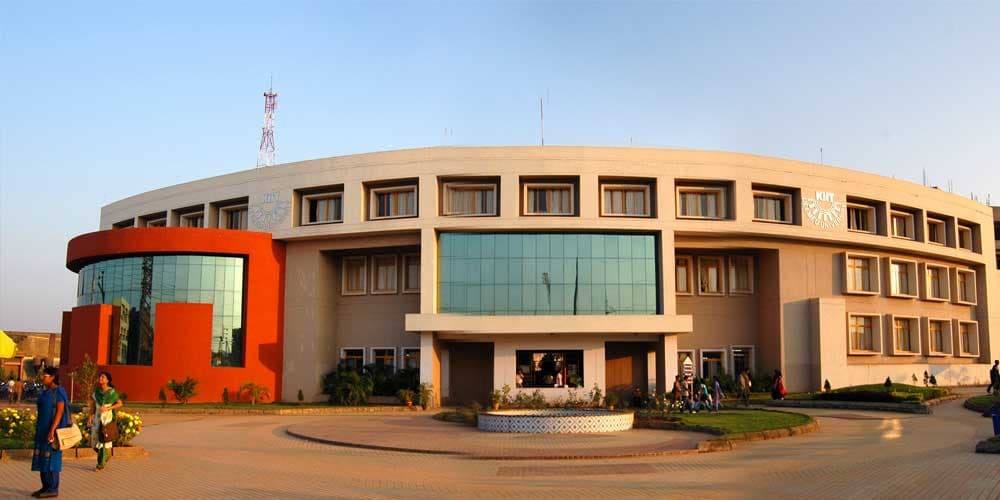


KIIT Syllabus 2026: Course Schemes and Semester Curriculum



Students at Kalinga Institute of Industrial Technology (KIIT), Bhubaneswar access their course curriculum and semester evaluation schemes approved by the Academic Council. Across 51 degree programmes offered through 30 academic schools, course structures combine core subject theory, practical laboratory work, sessionals, and multidisciplinary electives under the regulations of the Office of the Controller of Examinations.
Table of Contents
KIIT B.Tech Syllabus 2026: First Year Course Schemes
KIIT structures the first-year syllabus for Bachelor of Technology (B.Tech) programmes into Scheme I and Scheme II. These course schemes apply across specialized engineering schools, including the School of Computer Science and Engineering, School of Civil Engineering, School of Electronics Engineering, School of Mechanical Engineering, School of Electrical Engineering, School of Aerospace Engineering, School of Chemical Engineering, and School of Biotechnology.
| Course Scheme & Semester | Theory Courses (Credits) | Practical & Sessional Courses (Credits) | Total Credits |
|---|---|---|---|
| Scheme I - First Semester | Physics (3), Differential Equations & Linear Algebra (4), Science Elective (2), Engineering Elective (2), Science of Living Systems (2), Environmental Science (2) | Physics Lab (1), Programming Lab (4), Engineering Drawing & Graphics (1) | 21 |
| Scheme I - Second Semester (Computer Science & Electronics) | Chemistry (3), Transform Calculus & Numerical Analysis (4), English (2), Basic Electronics (2), Basic Electrical Engineering (2), HASS Elective I (2) | Chemistry Lab (1), Engineering Lab (1), Workshop (1), Yoga (1), Communication Lab (1) | 20 |
| Scheme I - Second Semester (Civil, Mechanical & Electrical) | Chemistry (3), Transform Calculus & Numerical Analysis (4), English (2), Basic Electronics (2), Engineering Mechanics (2), HASS Elective I (2) | Chemistry Lab (1), Engineering Lab (1), Workshop (1), Yoga (1), Communication Lab (1) | 20 |
| Scheme II - First Semester | Chemistry (3), Differential Equations & Linear Algebra (4), English (2), Basic Electronics (2), Basic Electrical Engineering (2), HASS Elective I (2) | Chemistry Lab (1), Engineering Lab (1), Workshop (1), Yoga (1), Communication Lab (1) | 20 |
| Scheme II - Second Semester | Physics (3), Transform Calculus & Numerical Analysis (4), Science Elective (2), Engineering Elective (2), Science of Living Systems (2), Environmental Science (2) | Physics Lab (1), Programming Lab (4), Engineering Drawing & Graphics (1) | 21 |
KIIT First Year Elective Courses Breakdown
First-year B.Tech students choose multidisciplinary electives from Engineering, Science, and Humanities, Arts & Social Sciences (HASS) streams to complete their credit requirements.
| Elective Type | Course Code & Title | Credits | Conditions / Prerequisites |
|---|---|---|---|
| Engineering Elective | CE10001 Basic Civil Engineering | 2 | Open to all engineering streams |
| Engineering Elective | ME10003 Basic Mechanical Engineering | 2 | Not available for Mechanical Engineering students |
| Engineering Elective | EE10001 Elements of Machine Learning | 2 | Not available for Computer Engineering students |
| Engineering Elective | EC10003 Biomedical Engineering | 2 | Open to all engineering streams |
| Engineering Elective | EE10003 Basic Instrumentation | 2 | Open to all engineering streams |
| Science Elective | CH10005 Nanoscience | 2 | Open to all first-year B.Tech students |
| Science Elective | PH10003 Smart Materials | 2 | Open to all first-year B.Tech students |
KIIT Academic Schools & Programme Syllabus Structure
KIIT offers 51 degree programmes across 30 academic schools, detailing course components for undergraduate, postgraduate, and doctoral levels. Detailed annual fees and specialisation choices appear on the KIIT Courses & Fees overview.
| Academic School Name | Offered Programmes & Syllabus Levels | Specialisation Options Count |
|---|---|---|
| School of Computer Science and Engineering | B.Tech, M.Tech, Ph.D. | 33 B.Tech options across engineering schools |
| School of Computer Applications | BCA, B.Sc, MCA, M.Sc | 1 BCA option |
| School of Management | BBA, MBA, Ph.D. | 11 MBA options |
| School of Medical Sciences | MBBS, MD, MS, Ph.D. | 1 MBBS option |
| School of Dental Sciences | BDS, MDS, Ph.D. | 1 BDS option |
| School of Law | B.A. LL.B, B.Sc. LL.B, B.B.A. LL.B, LL.M, Ph.D. | |
| School of Architecture & Planning | B.Arch, M.Arch, M.Des, Ph.D. | 1 B.Arch option |
| School of Biotechnology | B.Tech, M.Sc, M.Tech, Ph.D. | 8 M.Sc options across science schools |
KIIT Academic Regulations and Examination Guidelines
The University Examination Committee frames all academic regulations, which are formally ratified by the Academic Council under the leadership of the Vice Chancellor. The Office of the Controller of Examinations administers these rules via designated Deputy and Assistant Controllers of Examinations assigned to each academic school.
Academic policies enforced by the Controller of Examinations cover key student processes:
- Minor and Honours Guidelines: B.Tech students can register for additional Honours or Minor credits alongside their core branch requirements.
- Academic Bank of Credits (ABC): KIIT integrates credit transfer and accumulation tracking under national ABC norms.
- Evaluation & Grading System: Courses undergo continuous internal assessments, end-semester examinations, and relative or absolute letter grading.
- Backlog & Supplementary Exams: Specific rules govern eligibility and registration timelines for clearing backlog papers and appearing for supplementary tests.
- CGPA Improvement: Enrolled students who meet academic threshold criteria can apply for CGPA improvement examinations.
Sources
Frequently Asked Questions
How is the B.Tech first-year syllabus structured at KIIT?
KIIT divides the B.Tech first-year syllabus into Scheme I and Scheme II. Both schemes cover total course loads of 41 credits across two semesters (21 credits in one semester and 20 in the other), comprising basic science, core engineering, laboratory sessions, workshop, yoga, and multidisciplinary electives.
Where can students verify examination regulations at KIIT?
Examination regulations are managed by the Office of the Controller of Examinations and ratified by the Academic Council. Students can check academic regulations, grading schemes, and backlog guidelines directly through the official examination portal (coe.kiit.ac.in).
Can engineering students take electives from other departments at KIIT?
Yes, KIIT B.Tech curriculum includes dedicated Engineering Electives, Science Electives, and HASS Electives in the first year. Specific restrictions apply, such as Mechanical Engineering students being ineligible for Basic Mechanical Engineering (ME10003).
Does KIIT offer B.Tech Honours and Minor options?
Yes, KIIT permits eligible B.Tech students to opt for Minor and Honours specialisations according to guidelines framed by the University Examination Committee and the Academic Council.

fits you best?
Get personalized guidance from our admission counselors