Table of Contents
About Institute of Distance Education, Rajiv Gandhi University
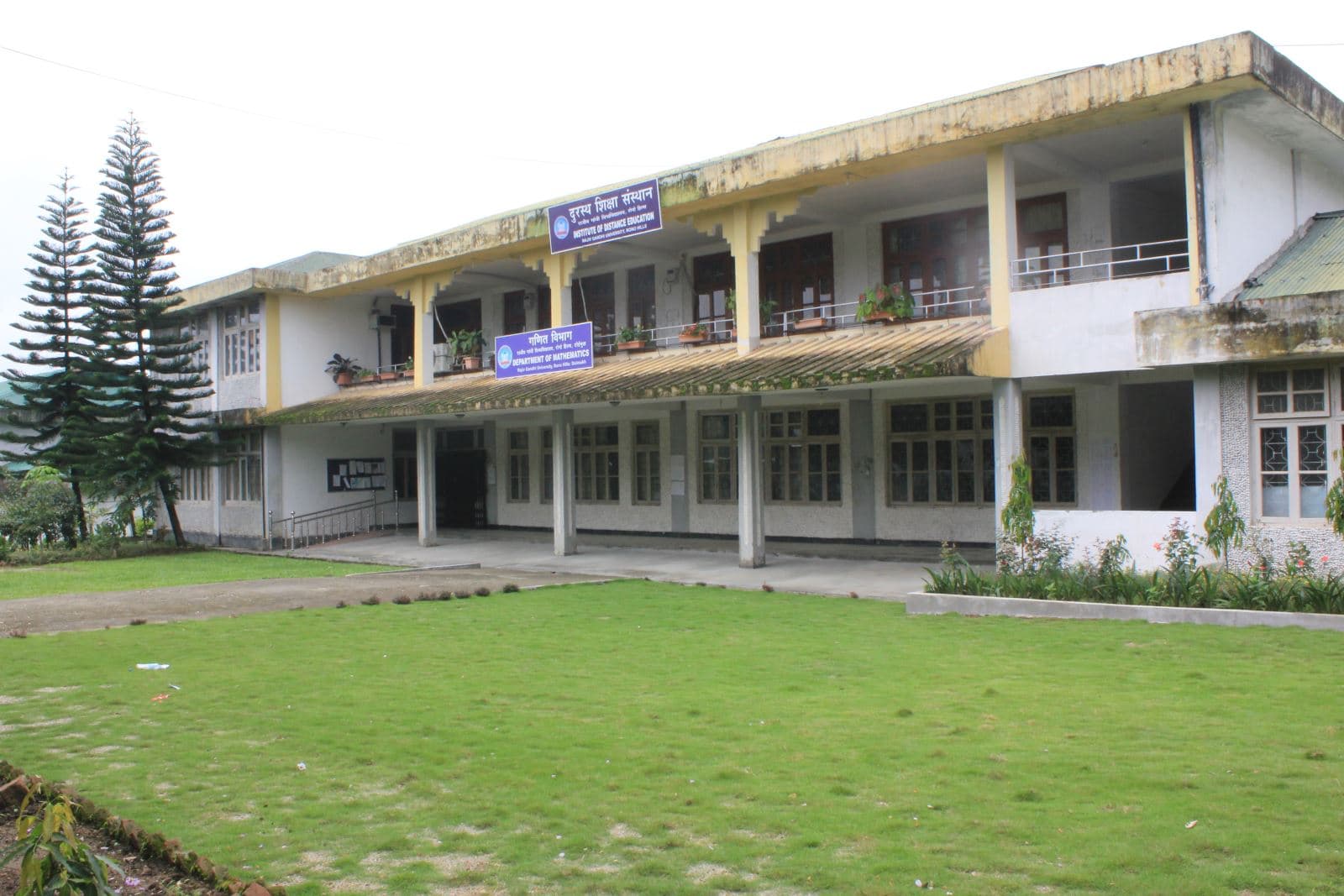
IDE RGU Distance Learning: Undergraduate & Postgraduate Courses 2026
The Institute of Distance Education, Rajiv Gandhi University (IDE RGU) offers UGC-DEB recognized distance learning programs for undergraduate and postgraduate students. Established in 2005 and renamed in 2008, this Central University provides merit-based admissions without an entrance exam, ensuring accessible higher education for you.
| Parameter | Details |
|---|---|
| University Name | Rajiv Gandhi University (RGU) |
| Mode of Education | Distance Learning |
| Approval & Accreditation | UGC Recognized; NAAC 'A' Grade; Distance Education Bureau (DEB) Approved |
| Popular Courses Offered | UG: BA (Economics, Political Science, History, English, Hindi), BCom; PG: MA (Education, English, History, Political Science), M.Com, MBA |
| Application Mode | Online and Offline |
| Admission Basis | Merit-based, no entrance exam for distance programs |
| Application Fee | INR 500 |
| Course Fee Range | INR 3,000 to INR 12,100 per year (varies by course) |
| Course Duration | UG courses: 3 years (extendable to 4 years as per NEP); PG courses: 2 years |
| Maximum Completion Time | Up to 5 years |
| Key Features | - Affordable fees and scholarships - Recognized degrees equivalent to regular courses - Personal contact programs for interactive learning - Study materials provided |
| Admission Important Dates | Online registration for the January 2026 session started on 25 Nov 2025. The last date to apply for that session was 30 Dec 2025, and the fee submission deadline was 10 Jan 2026. |
| Official Website | https://ide.rgu.ac.in |
This table provides a comprehensive overview of IDE RGU's distance learning programs, highlighting its central university status, 'A' grade NAAC accreditation, and merit-based admission. While the January 2026 session dates have passed, you can still apply for the July 2026 academic session until 31 July 2026.
For the full fee list by course, see Institute of Distance Education, Rajiv Gandhi University courses and fees.
IDE RGU Distance Education: Program Fees and Payment Structure 2026
This section details the program fees and payment structure for various courses offered by the Institute of Distance Education, Rajiv Gandhi University. Understanding the fee breakdown, including application costs and annual course fees, helps you plan your financial commitment for the 2026 academic year.
| Program/Item | Approximate Fee | Frequency/Notes |
|---|---|---|
| Application Fee | Rs. 500 | One-time |
| UG Courses | INR 5,400 to INR 6,000 | Per year |
| PG Courses | INR 12,000 to INR 14,000 | Average starting range per year |
| BA (Bachelor of Arts) | INR 5,400 | Per year |
| BCom (Bachelor of Commerce) | INR 6,000 | Per year |
| BA in Economics | ₹5,450 | Per semester |
| MA (Master of Arts) | INR 12,100 | Per year |
| MA in Education | ₹12,100 | Per semester |
| MA in English | ₹12,150 | Per semester |
| Certificate in Fisheries Technology | ₹8,850 | Total fee |
| General Course Fee Range | INR 3,000 to INR 12,100 | Per year |
This table provides a comprehensive overview of the approximate fees for various undergraduate, postgraduate, and certificate programs, helping you understand the financial commitment involved. The fee submission deadline for 2026 was 10 January 2026.
Rajiv Gandhi University IDE Admission Process & Eligibility 2026
The Institute of Distance Education, Rajiv Gandhi University overview reveals a straightforward admission process for its distance programs. You can apply online or offline, with selection based on merit. The application fee is Rs. 500, and no entrance exam is required for these courses.
- Admission Mode: Online and Offline
- Selection Criteria: Merit-based
- Application Fee: Rs. 500
- Official Website: ide.rgu.ac.in
- Last Date to Apply (July 2026 Session): 31 July 2026
- Entrance Exam: Not Applicable (for distance programs)
While the application deadline for the July 2026 Academic Session is 31 July 2026, registration for the January 2026 Session opened on 25 November 2025 and closed on 30 December 2025. The fee submission deadline for that session was 10 January 2026.
| Course Type | Eligibility Criteria |
|---|---|
| UG & Diploma Courses (General) | Passed 10+2 (Class 12) from a recognized board with minimum 50% marks. Minimum age 16, no upper age limit. |
| BA | Passing 10+2 from a recognized board with at least 45% marks. |
| BCom | 10+2 with Commerce as a subject and at least 45% marks. |
| BA in Economics | 10+2 with 33% marks. |
| PG Courses (General) | Hold a Bachelor’s degree in a relevant subject with minimum 50% marks. No age limit. |
| MA | Bachelor’s degree with 50% marks. |
| MA in Education | Bachelor’s degree with 35% marks. |
| MA in English | Bachelor’s degree with 35% marks. |
| Certificate in Fisheries Technology | 10th pass. |
You must meet specific academic qualifications for your chosen program, ranging from a 10th pass for certificate courses to a Bachelor's degree for postgraduate studies. Undergraduate and diploma courses require a minimum age of 16, but there is no upper age limit for any course.
- Required IDs: ABC DEB ID, DEB ID (where applicable).
- 10th Marksheet: Essential for all applications.
- 12th Marksheet: Required for UG and Diploma courses.
- Graduation Marksheet: Necessary for PG course applications.
- Aadhaar Card: For identity verification purposes.
- Passport Photo & Signature: For your application form.
Additionally, you may need to submit a Category Certificate if applicable, a Migration Certificate if transferring from another university, and a Transfer Certificate depending on your previous institution.
| Step | Admission Process | Details |
|---|---|---|
| Step 1 | Online Registration | Visit the official admission portal and create a new student account. |
| Step 2 | Fill Application Form | Enter personal, academic, and contact details carefully. |
| Step 3 | Upload Documents | Upload scanned copies of required documents such as mark sheets, Aadhaar Card, passport-size photo, signature, ABC ID, and DEB ID (where applicable). |
| Step 4 | Pay Application Fee | Complete the application fee payment through the available online payment methods. |
| Step 5 | Application Submission | Review all details and submit the completed application form. |
| Step 6 | Document Verification | The university verifies the submitted documents. Physical verification may be required for certain admissions. |
| Step 7 | Admission Confirmation | Eligible candidates receive admission confirmation after successful verification. |
| Step 8 | Enrollment & Study Material | Students receive their enrollment details, student ID, and access to study materials and academic resources. |
| Step 9 | Classes Begin | Students can attend counselling/contact classes (where applicable) and continue their studies as per the academic schedule. |
The admission process involves a clear nine-step online procedure, guiding you from initial registration and application submission through document verification to final admission confirmation and access to study materials.
For the full process and documents, see Institute of Distance Education, Rajiv Gandhi University admission.
UGC Recognition & Benefits of RGU Distance Education 2026
A distance degree from an entitled university holds the same legal academic value as a regular program under applicable UGC regulations. The Institute of Distance Education, Rajiv Gandhi University, ensures its programs match on-campus offerings in eligibility, content, and examination, providing significant benefits for diverse learners.
| Method / Component | Academic Approach & Delivery Details | Key Student Benefits |
|---|---|---|
| Self-Instructional Study Material (SISM) | Approved under established Open and Distance Learning (ODL) frameworks and provided directly at admission. Materials are available in English for most courses, and in Hindi for specific Hindi language programmes. | - Promotes independent learning. - Enables students to learn at their own pace. - Allows for unlimited revision of complex topics. - Helps balance education with professional or family responsibilities. |
| Internal Assignments | Serves as a core continuous evaluation mechanism throughout the semester, shifting the focus away from relying solely on final term-end examinations. | - Encourages regular, continuous interaction with the course content. - Helps apply theoretical concepts to real-world scenarios. - Improves academic writing and expression skills. - Keeps distance learners consistency engaged with their studies. |
| Contact & Counseling Programmes (CCP/PCP) | A highly rated feature involving structured 7-to-15-day on-campus or designated PCP sessions conducted specifically for postgraduate (PG) students. | - Creates a valuable academic bridge to counter classroom isolation. - Provides direct, face-to-face interaction with university faculty. - Allows students to meet university coordinators and resolve queries. - Offers dedicated support for solving assignment and pre-exam questions. |
This table highlights how the university's structured academic delivery and robust support systems empower distance learners, promoting independent study, continuous engagement, and valuable faculty interaction.
- IDE Establishment: The Institute of Distance Education was established in 2005.
- Renaming: The Centre for Distance Education was renamed to IDE in 2008.
- Ideal Learners: ODL format suits working professionals, homemakers, and rural learners.
- Instruction Medium: English for most subjects; exceptions for specific language courses.
- SC/ST Relaxation: Candidate relaxation is available as per government norms.
- Initial PG Courses: 5 subjects introduced from the Academic Session 2013-14.
For the specific 2026 cycle, online registration commenced on 25 November 2025, and the last date to apply was 30 December 2025. You submitted fees by 10 January 2026. Note that the admission last date for the July 2026 Session is 31 July 2026.
IDE RGU vs Traditional Learning: Flexibility & Accessibility 2026
The Institute of Distance Education, Rajiv Gandhi University overview reveals its commitment to flexible and accessible higher education. It provides an alternative mode of instruction, overcoming traditional learning challenges for millions unable to join regular programs, including employed or unemployed individuals and those in rural areas. Its degrees are 'At Par with Regular Mode' under UGC regulations.
| Feature | Traditional Learning (Challenges/Characteristics) | IDE RGU (Flexibility & Accessibility Solution) | Specific Numbers/Details (2026) |
|---|---|---|---|
| Access & Reach | Limited seats, lack of facilities/infrastructure, socio-economic barriers, inability to attend regular classes. | Overcomes barriers, provides opportunities for those unable to join regular programs, reaches rural/remote areas. | Addresses 'millions of people' demand |
| Learning Pace & Schedule | Fixed classroom schedules, on-campus attendance. | Self-Instructional Study Material (SISM) for independent learning, allows students to learn at your own pace and balance with responsibilities. | Contact & Counseling Programmes (CCP/PCP) of approximately 7-15 days duration. Mandatory for MA/professional courses, not compulsory for BA. |
| Admission Process | Often involves entrance examinations. | Simplified, merit-based admission. | No entrance examination for BA or MA programs. Online Registration Fee: ₹450 – ₹500 (one-time). |
| Course Offerings (Humanities/Social Sciences) | Implied limited access for certain demographics due to physical constraints. | Concentrates on humanities and commerce disciplines. | BA: 7 specializations (Sociology, Political Science, English, History, Hindi, Education, Economics). MA: 6 specializations (English, Hindi, History, Education, Economics, Political Science). |
| Affordability | Implied higher costs, especially in private institutions. | Economical option compared to many private universities. | Bachelor of Arts (BA) Annual Fee: ₹5,400 – ₹6,000. Master of Arts (MA) Annual Fee: ₹12,000 – ₹14,000. |
| Study Material Delivery | Classroom lectures, standard textbooks. | Self-Instructional Study Material (SISM) provided directly at admission. | Materials available in English for most courses, and in Hindi for specific Hindi language programs. |
| Evaluation Method | Often heavily reliant on final term-end examinations. | Continuous evaluation mechanism. | Internal Assignments serve as a core continuous evaluation mechanism throughout the semester. |
This table clearly illustrates how the university's distance education programs provide significant flexibility and accessibility compared to traditional learning. You benefit from self-paced study, simplified admissions, and economical fees, making higher education attainable for a broader population.
Institute of Distance Education, Rajiv Gandhi University Courses and Fees 2026
| Degree | Duration | Annual Fee | Seats | Eligibility | Action |
|---|---|---|---|---|---|
Bachelor of Arts9 Specializations | 3 Years | ₹5,400 - ₹15,800 (Total Fee) | 22 | 10+2 | |
Bachelor of Computer Applications1 Specialization | 3 Years | ₹42,450 (Total Fee) | 10+2 | ||
Bachelor of Physical Education1 Specialization | 3 Years | ₹30,150 (Total Fee) | 10+2 | ||
Certificate (Part Time)2 Specializations | 1 Year | ₹5,280 - ₹7,180 (Total Fee) | |||
Master of Arts (Part Time)11 Specializations | 2 Years | ₹12,100 - ₹24,200 (Total Fee) | Graduation | ||
Bachelor of Education (Part Time)1 Specialization | 2 Years | ₹1.50 Lakhs (Total Fee) |
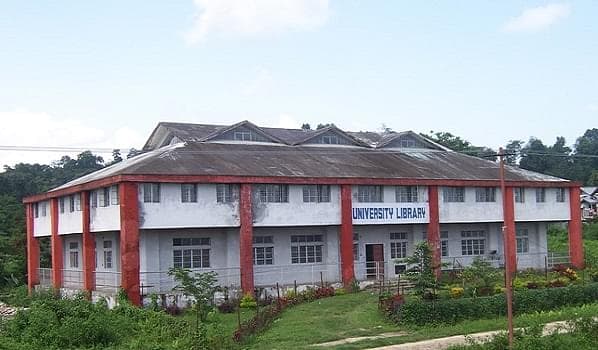
Institute of Distance Education, Rajiv Gandhi University Campus Gallery
Nearest Attractions at Institute of Distance Education, Rajiv Gandhi University


Get personalized guidance from our admission counselors
FAQs on Institute of Distance Education, Rajiv Gandhi University
How does IDE RGU compare to traditional learning in terms of flexibility and accessibility for 2026?
Rajiv Gandhi University's Institute of Distance Education (IDE) offers flexible online learning that allows students to study remotely, access digital learning materials, and complete assignments at their convenience. Compared to traditional classroom learning, it provides greater flexibility in terms of time and location.
What are the specific numbers for flexibility and accessibility options at IDE RGU versus traditional learning in 2026?
IDE Rajiv Gandhi University offers postgraduate programmes in five subjects through a flexible distance learning mode, enabling learners to access study materials and online academic support without the need for regular campus attendance.
What is the Institute of Distance Education, Rajiv Gandhi University overview?
The Institute of Distance Education (IDE), Rajiv Gandhi University, also known as the Centre for Distance and Online Education, provides undergraduate and postgraduate programmes through distance learning, offering higher education opportunities to students who are unable to attend regular classes.
How do I apply for the Institute of Distance Education, Rajiv Gandhi University?
Candidates can apply online through the university's official admission portal by registering, completing the application form, uploading the required documents, and submitting the application along with the prescribed fee.
What are the eligibility requirements for the Institute of Distance Education, Rajiv Gandhi University?
For undergraduate programmes, candidates generally must have passed Class 12 (10+2) from a recognized board. Eligibility for postgraduate programmes requires a bachelor's degree in the relevant discipline. Specific eligibility may vary depending on the course.
What is the application timeline for the Institute of Distance Education, Rajiv Gandhi University?
The expected last date for submitting applications for the 2026 admission cycle is 31 July 2026. Candidates should refer to the official university website for any updates to the admission schedule.
Discover More Colleges












fits you best?
Get personalized guidance from our admission counselors