

Home / …Chandigarh University Online / Bachelor of Arts in Journali…
Chandigarh University Online
AICTE Approved
NAAC A+
UGC Approved
Tell powerful stories with a journalism and mass comm degree.
26,000+ Learners, 13+ Yrs Legacy, and 1,300+ Recruiters
Last few seats left for July batch
Let's Plan Your BA
Honest guidance, no sales pitch. Ever.
Name
Phone
Highest Qualification
State
Your data is 100% secure. No spam, ever.

Fresh Graduates
Kick-start your management career at the most affordable fee in the industry

Career Switcher
Pivot from technical or non-management roles into business leadership

Entrepreneur
Build your business with structured knowledge in strategy, finance and operations

Working Professional
Upskill without quitting your job with flexible weekend classes
Class 12
Humanities student seeking structured knowledge and communication skills
36 Months
Critical thinking, communication, social sciences & 8+ live projects

₹4 LPA
Content Writer / HR Executive / Civil Services — 100+ hiring partners
Class 12
Humanities student seeking structured knowledge and communication skills
36 Months
Critical thinking, communication, social sciences & 8+ live projects
₹4 LPA
Content Writer / HR Executive / Civil Services — 100+ hiring partners
Student Category:
All Students
Eligibility:
10+2 or its equivalent examination in any stream conducted by a recognized Board / University / Council
Document Required:
Aadhaar card (mandatory for Indian citizens), Proof of address, Class 10th & 12th marksheets
| Academic Level | Min Score (General) | Min Score (Reserved) | Student Category | Eligibility | Document Required |
|---|---|---|---|---|---|
| 10+2 | -- | -- | All Students | 10+2 or its equivalent examination in any stream conducted by a recognized Board / University / Council | Aadhaar card (mandatory for Indian citizens), Proof of address, Class 10th & 12th marksheets |
Communication Skills
History of Print and Broadcasting
Introduction to Mass Communication
Current Affairs
Print Media Reporting and Editing
Student Category
Plan Type
Amount
Fee Note
Domestic
LUMPSUM
131250 INR
Full program fee with includes exam fee Except Registration fee
Domestic
YEARLY
43750 INR
Annual Payment
Domestic
SEMESTER
21875 INR
Paid semesterly
Domestic
EMI
5469 INR
24 Monthly No Cost EMI
Domestic
REGISTRATION-FEE
1000 INR
One time payment

Equivalent to on-campus degree
UGC-DEB & AICTE Approved

Join 2,400+ students



Current Salary (₹ LPA)
Years Of Experience
Projected Salary After ROI B.A
-
Enter your salary and experience to see projections
—
Payback Period
—
5 Yr Earnings5-Year Extra Earnings
—
ROI on Fee
FEATURE
Chandigarh University
OTHERS
UGC Approved

WES Recognized
Scholarships
Live Sessions
Placement Support
Industry Mentors
Chandigarh University
OTHERS
VariesChandigarh University
OTHERS
--Chandigarh University
5OTHERS
--Chandigarh University
Weekend LiveOTHERS
RecordedChandigarh University
500+ PartnersOTHERS
LimitedChandigarh University
OTHERS
--
Discover what skills you need to bridge the gap
What's your experience level?
Yes, the CU Online BA Journalism and Mass Communication degree is fully valid for government jobs in India. This online degree is approved by the University Grants Commission (UGC) and its Distance Education Bureau (DEB), ensuring its equivalence to a regular degree. Government recruitment bodies treat UGC-DEB approved online degrees on par with conventional degrees for eligibility. This makes it acceptable for various central and state government positions requiring a bachelor's degree.
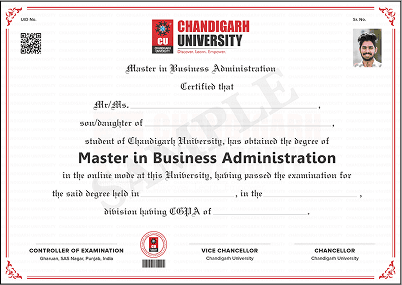
Yes, the CU Online BA Journalism and Mass Communication is recognized by UGC-DEB and increasingly by employers across India. Chandigarh University holds an A+ NAAC grade, and its online programs, including this BA, are specifically approved by UGC-DEB for the academic year 2026. Employers value the practical skills gained, and with a strong portfolio, graduates secure roles at media houses like Zee News, India Today, and Times Group. The degree certificate explicitly states "Online Mode," but its academic standing is equivalent to an on-campus degree.
To be eligible for CU Online BA Journalism and Mass Communication, you must have successfully completed 10+2 (or equivalent) from a recognized board. A minimum aggregate of 50% marks in your 10+2 examination is typically required. Students from any stream (Science, Commerce, Arts) are welcome to apply. There is no upper age limit for admission to this online program.
You can apply for CU Online BA Journalism and Mass Communication entirely online through the official Chandigarh University Online portal, and there is no entrance exam. The application involves filling out an online form, uploading scanned copies of your 10th and 12th mark sheets, and a passport-sized photograph. After document verification, you will proceed to pay the first semester fees online to confirm your admission. Admission is based solely on your 10+2 academic merit, simplifying the process for aspiring students.
The total fee for the CU Online BA Journalism and Mass Communication program is approximately ₹85,000 to ₹95,000 for the entire three-year duration, payable semester-wise. Yes, EMI options are readily available through partnerships with financial institutions like Eduvanz and Propelld, offering flexible repayment plans over 6, 12, or 24 months. These plans typically require a minimal down payment and have interest rates starting from 8% per annum.
Yes, CU offers specific scholarships and financial aid for CU Online BA Journalism and Mass Communication students. These include merit-based scholarships for students with 85%+ marks in their 12th standard, and need-based aid for those with an annual family income below ₹4 LPA. Additionally, a 10% early bird discount is often available for admissions completed before the priority deadline, reducing the first-semester fee.
After completing CU Online BA Journalism and Mass Communication, graduates have a strong career scope in India across various media sectors. You can pursue roles such as Content Writer, Digital Marketing Executive, Social Media Manager, Reporter, Sub-Editor, PR Executive, or Media Planner. Opportunities exist in news organizations, advertising agencies, PR firms, digital media companies, and corporate communication departments, with a high demand for digital content specialists.
After completing CU Online BA Journalism and Mass Communication, an entry-level salary package in India typically ranges from ₹3.0 LPA to ₹4.5 LPA. With 3-5 years of experience in roles like Senior Content Writer or Digital Marketing Specialist, this can increase to ₹6.0 LPA to ₹9.0 LPA. Top performers in specialized fields like PR or media planning can achieve ₹12 LPA or more after 7+ years, especially in metro cities like Mumbai or Bengaluru.
CU Online BA Journalism and Mass Communication holds the same academic and professional recognition as a regular, offline BA in Journalism degree, as both are UGC-DEB approved. The key difference lies in the delivery mode: online offers flexibility for self-paced learning, while offline provides a traditional campus experience. Employers recognize the online degree equally, focusing on skills and portfolio. Opt for CU Online BA Journalism and Mass Communication if you need flexibility and self-discipline without compromising degree validity.
CU Online BA Journalism and Mass Communication is often considered a stronger choice due to Chandigarh University's NAAC A+ accreditation and robust industry partnerships. Its curriculum is regularly updated to meet 2026 industry standards, including AI in media and data journalism modules, which many other online programs lack. The program also boasts experienced faculty with an average of 10+ years in media, offering practical insights. This makes CU Online BA Journalism and Mass Communication highly competitive for career readiness.
The CU Online BA Journalism and Mass Communication curriculum covers core subjects like Reporting and Editing, Media Ethics, Digital Journalism, and Public Relations. It includes practical modules on content creation, video production, and social media management, with options for electives in areas like Sports Journalism or Corporate Communication. The program is structured across 6 semesters over 3 years, with each semester focusing on a blend of theoretical knowledge and practical application. This ensures graduates are industry-ready with a diverse skill set.
Exams for CU Online BA Journalism and Mass Communication are conducted online through a secure proctored system, typically at the end of each semester. Yes, live interactive classes are held 2-3 times per week, complemented by a comprehensive Learning Management System (LMS) providing recorded lectures, e-books, and assignment resources. Students also receive access to a digital library with over 10,000 journalism-specific journals and publications. This blended approach ensures robust learning support for all students.