Table of Contents
About College of Agricultural Engineering and Post Harvest Technology
College of Agricultural Engineering and Post Harvest Technology Courses and Fees 2026
| Degree | Duration | Annual Fee | Seats | Eligibility | Action |
|---|---|---|---|---|---|
Bachelor of Technology2 Specializations | 4 Years | ₹4,280 | 40 | 10+2 | Apply Now |
Ph.D1 Specialization | 2 Years | NA | NA | NA | Apply Now |
Master of Technology3 Specializations | 2 Years | NA | 6 | Graduation | Apply Now |
College of Agricultural Engineering and Post Harvest Technology Rankings
Accreditations

ICAR
Nearest Attractions at College of Agricultural Engineering and Post Harvest Technology
 College of Agricultural Engineering & Post-Harvest Technology, Ranipool, Gangtok - 737135, Sikkim, India
 Contact: 03592-251359, 03592-251381
Nearby Locations

Pakyong Airport
32.5 km

Ranipool Bus Stop
km

Manipal Hospital
km

New Jalpaiguri (NJP)
120 km
Facilities Provided by College of Agricultural Engineering and Post Harvest Technology
- Auditorium
- Conference Hall
- North Academic Block
- Smart Classrooms
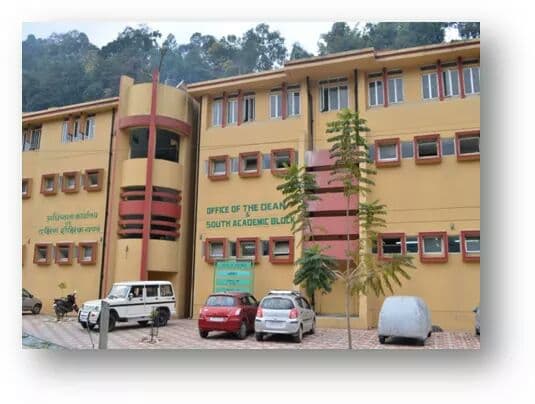
- South Academic Block
- Guest House
- Water Coolers (Hostel Mess)
- General Accessibility Measures
- General Entry/Exit Management
- Canteen
- Hostel Mess and Dining Rooms
- Boys Hostel (Block 1)
- Girls Hostel (Block 1)
- Campus Wi-Fi and Internet Connectivity
- Computer Laboratory (Main)
- Mobile-based Agro Advisory Services Project (m4Agri)
- Smart Irrigation System for Greenhouse (IoT-based)
- Innovation Hubs
- Pilot Plants
- Technology Incubation Centre
- Agro-processing Lab
- Agronomy & Soil Science Lab
- Air Conditioning & Refrigeration Lab
- Applied Mechanics Lab
- Bio-energy-cum-Renewable Energy Lab
- Chemistry, Bio-Chemistry & Microbiology Lab
- Computer Lab (Basic Sciences)
- Engineering Drawing Lab
- Farm Equipment Testing Lab
- Farm Power & Farm Machinery Lab
- Fluid Mechanics & Irrigation-Drainage Engg. Lab
- Food & Dairy Engg. Lab
- Food Quality Testing Lab
- GIS & Remote Sensing Lab
- Heat & Mass Transfer Lab
- Human Engg. & Safety in Agriculture Lab
- Physics/Electrical/Electronics (Combined) Lab
- Plastics Engg. & Technology Application Lab (AICRP on PET)
- Soil Dynamics Lab
- Soil Mechanics & Soil-Water Conservation Lab
- Soil/Water Quality Testing Lab
- Theory of Machine Lab
- Thermodynamics Lab
- Unit Operations in Agril. Processing Lab
- Utilization of Animal Energy (UAE-AICRP) Lab
- Workshop (Farm Power & Machinery)
- College Library
- E-library Facility
- Medical Unit
- Common Room with TV (Girls Hostel)
- Recreation Areas (Boys Hostel)
- General Safety & Security Measures
- Gymnasium (Hostels)
- Indoor Games Facilities
- Sports Zones
- Internal Complaint Committee
- Public Relation and Media Management (PRMM) Cell
- SC / ST Student Cell
- Training-cum-Placement and Career Development Centre
- Parking Facilities
Get personalized guidance from our admission counselors
FAQs on College of Agricultural Engineering and Post Harvest Technology
College of Agricultural Engineering and Post Harvest Technology is good for engineering with a placement rate of 92% for the 2025 batch, an average package of Rs. 3.5 LPA, and a focus on agricultural engineering and post-harvest technology. The college offers a range of specialized courses, including Agricultural Engineering and Post-Harvest Technology, with a duration of 2 years postgraduate program. Infrastructure and industry connections are robust, with partnerships with several agricultural and technology firms in the region.
College of Agricultural Engineering and Post Harvest Technology is known for its strong programs in agricultural engineering and food technology and is ranked 12th in the NIRF rankings for 2025. The college offers two B.Tech programs with 58 and 22 admissions respectively, focusing on Agricultural Engineering and Food Technology.
Students at College of Agricultural Engineering and Post Harvest Technology rate it 4/5 for placements, highlighting a 90% job placement rate with an average starting salary of Rs. 3.5 lakhs per annum. They also praise the faculty for their industry experience and regular guest lectures, but note that the campus facilities could be improved, with some students suggesting the need for better infrastructure and more modern amenities.
The admission process at College of Agricultural Engineering and Post Harvest Technology (CAEPHT) requires the Joint Entrance Examination (JEE) followed by counseling and document verification. For the B.Tech program in Agricultural Engineering, 58 students are admitted annually, while 22 are admitted for Food Technology. The counseling and document verification process typically take place in early May for the admission batch of 2026.
College of Agricultural Engineering and Post Harvest Technology is ranked 15th in NIRF 2025 and 12th in QS World University Rankings for agricultural engineering and technology.
The campus life at College of Agricultural Engineering and Post Harvest Technology offers 8 hostels with modern amenities, including a mess that serves a variety of vegetarian and non-vegetarian meals at Rs 500 per month. Students can participate in clubs such as the Agricultural Machinery Club and the Post-Harvest Management Club, and the college hosts annual fests like the AgriTech Carnival. The environment is conducive to learning with state-of-the-art laboratories and a lush green campus.
The entrance exams accepted at College of Agricultural Engineering and Post Harvest Technology for postgraduate programmes are the ICAR Junior Research Fellowship (JRF) examination with a cutoff rank of 100, and the university's own entrance test with a cutoff percentile of 60.
The placement at College of Agricultural Engineering and Post Harvest Technology shows 85% students placed with an average package of Rs 4.5 LPA and a highest package of Rs 6 LPA.
The eligibility for admission to the College of Agricultural Engineering and Post Harvest Technology requires a minimum of 60% in Physics, Chemistry, and Mathematics in the Higher Secondary examination and an entrance test score of at least 65%.
The important admission dates for the College of Agricultural Engineering and Post Harvest Technology (CAEPHT) in Gangtok are: application starts on January 1, 2025, the exam is conducted on March 15, 2025, and results are announced on April 1, 2025.
The placement at College of Agricultural Engineering and Post Harvest Technology shows 85% students placed with an average package of Rs 4.5 LPA and a highest package of Rs 6 LPA.
Discover more Colleges


NIRF #5 India
.png&w=1920&q=75)







fits you best?
Get personalized guidance from our admission counselors